Hot ImagesHot ImagesHot ImagesHot ImagesHot Images
Showing posts with label teenagers. Show all posts

August 11, 2011

Interview With Sophie Rae, the Lead Singer/Guitarist of "Care Bears on Fire" and Creator of Grrrl Beat


Photo by Jess Norton
Sophie Rae is the lead singer/guitarist of Care Bears on Fire, a pop-punk band with serious feminist undertones. But when she's not touring or rocking out for David Letterman (how cool is that?), this teen dynamo also operates her own webzine. Recently, one of my gracious associates — Stuck in the Past writer Andrew Jacobs — interviewed Sophie. Check out what she had to say!

Andrew Jacobs: How did you become a fan of rock music?

Sophie Rae: My parents always listened to a lot of rock music when I was growing up, lots of Patti Smith, Bruce Springsteen, and the Beatles. Eventually, my band-mates introduced me to punk and riot grrrl.

AJ: How old were you when you learned how to play the guitar?  Also, please discuss how you learned how to play.

SR: I was 9 when I started playing guitar. I took piano lessons before that, but I got bored of that pretty quickly. I started out just sort of messing around on the guitar by myself, but I started taking lessons when I was around 10. 

AJ: As a musician and as a songwriter, who/what are some of your influences and why?

SR: I’m really inspired by Le Tigre’s ability to confront really intense, difficult topics in the context of super fun, dance-y songs. I love Sleater-Kinney’s songs and the way they layer the different guitar parts and vocal melodies. And as a musician in a 3-piece band I really admire what a huge sound they can create from three instruments (and no bass!). I’m also really inspired by Bright Eyes right now. I think Conor Oberst’s songs are incredibly well-written and beautiful. 

AJ: How are you successfully able to juggle doing your band Care Bears on Fire and your personal life?

SR: Sometimes it can be tough, because doing well in school is really important to me. There have definitely been a lot of nights of studying for a math test in a dark smelly club between sound-check and our set. But I’ve found that being busy when you’re busy doing something you love makes it a lot easier.  

AJ: Would you be at all opposed to signing with a major record label at some point down the road?  Why or why not?

SR: It’s tough to say. Musicians talk about losing their musical integrity when they go major and feeling like they’ve lost their creative freedom. I think as long as the people I’m working with understand me and my musical goals I wouldn’t rule them out. It depends on the circumstance for sure.  

AJ: You may have already answered this but just in case you haven't, at this point in time in your life, how interested are you in making a living in some capacity (not necessarily as just an artist/musician either) in the music industry?

SR: I think it’s still pretty early for me to say. I have a lot of interests. I love writing, feminism, history . . . Music is just one of the things that I love to do, and I don’t want to limit myself. But I do love playing and writing music and I definitely don’t see myself stopping any time soon. 

AJ: When and why did you decide to become a feminist? 

SR: It’s hard to pinpoint when exactly I became a feminist. For as long as I’ve been playing music I’ve been subject to sexism and I always thought it was really unfair and totally sucked. I’d listened to riot grrrl music since I was about 11, but I really started to identify as a feminist this past December, when my band played a Kathleen Hanna tribute show in NYC, which was being filmed for a documentary about her. At that show I realized that sexism, especially in the music world, doesn’t have to be a given, it is something fight-able. I realized how many feminist artists and musicians there are and what a supportive community that could be. After that I started really getting in to feminism, reading feminist blogs and books and thinking more about issues of sexism and how I could combat them in my own life.

AJ: As a feminist and as a writer, who/what are some of your influences and why?

SR: I just finished Girls to the Front by Sara Marcus, which is about the riot grrrl movement. I loved how beautifully written it was while still being incredibly informative. It really made you feel like you were there — a part of the movement. I also recently read Jessica Valenti’s Full Frontal Feminism, which was amazing. It is very conversational in tone, sort of like just talking to one of your friends about feminism, but at the same time it was smart and educational. I’ve been trying to use that conversational tone in my articles for Grrrl Beat, because I think it makes difficult topics much more accessible.     

AJ: How much of an influence has the Riot Grrrl movement of the 1990s had on your feminist and political views?

SR: Huge! Listening to riot grrrl music when I was younger brought up so many issues that I’d never thought of like rape, abortion, female representation in the media, and sexism in general. Riot grrrl taught me that these issues were ones of equality and had to be confronted, both by individuals and by politicians.

AJ: Discuss your online forum, Grrrl Beat.

SR: Grrrl Beat is my online magazine, which I started in July. It’s been such an amazing experience! I write a bunch of the articles myself, but I also have a ton of submissions from other writers, mostly teenagers, on topics like feminism, music, culture, and fashion. I also post a lot of music from female musicians. I’m always looking for articles and music to post! Email me at grrrlbeat@gmail.com with any submissions/ideas for submissions.

AJ: Feel free to shamelessly plug any of your other musical or non-musical endeavors here.

For all New Yorkers: On August 13th Care Bears on Fire will be playing at the Manifesta loft, at a show put on by Permanent Wave, a super awesome feminist group I just joined. The other bands are Big Nils, Bad Credit No Credit and Shady Hawkins. To kick off the show at 8pm, I’m organizing a Q&A panel about women in music with myself, Amy Klein (of Titus Andronicus) and Mindy Abovitz (of Tom Tom Magazine) and Emmet Moeller (of Willie Mae Rock Camp for Girls) as moderator. And the show is a benefit for Willie Mae Rock Camp for Girls! Please come out and support! 

August 6, 2011

5 Perspectives on the Recent Birth Control Ruling

Imagine how happy I was to find this message sitting in my inbox Monday morning:

Today, the Department of Health and Human Services (HHS) announced that it will require all new insurance plans to cover birth control without co-pays under the new health reform law. This is one of the biggest victories for women’s health in a generation.

It feels like we're part of history here, doesn't it? This ruling is a huge, exciting deal, and it's been fun to see the feminist community alive with celebration these past few days. The fight for women's rights is a long, brutal one, but victories like these make it all worth it.

Since the "birth control conversation" is often restricted to the twenties-and-older sphere, I wanted to get some younger perspectives on this momentous ruling. Naturally, I turned to my feminist blogger friends!

Perspective #1: Talia P. (Star of Davida)

I don’t think I have to tell any American how much medical insurance stinks nowadays. Between the poor economy, unemployment rate, and increasingly expensive cost of living, among all the other blechy, costly stuff we have to deal with, most people are forced to view medication as a luxury. One of my mom’s doctors told her that he had prescribed Lipitor for another patient, and the patient told him that it was a choice between buying food and paying for the prescription. Thankfully, women will no longer have to make the Hobson’s choice between necessary items and birth control.

Birth control is an absolute staple of a truly feminist society. If women don’t have easy access to birth control (whether in the form of a diaphragm, pill, or whatever else), then they aren’t able to effectively control their bodies, the ultimate feminist goal. So if a woman has to pay some ridiculous co-pay for it (one of my mom’s meds is $180), that sort of defeats the whole purpose. That’s why this ruling is absolutely awesome — women now have a real choice. I know a lot of people think the term “birth control” is a euphemism, but I really think it’s a great description of what it really is: controlling if/when you want to try to have a child with your significant other.

No co-pay birth control is also important for women who need the Pill to treat cramps during their periods. I’m lucky, since all I need are a couple of Advils and I’m a happy camper, but a number of my friends would be climbing up the walls in pain if they weren’t on the Pill. I’m sure that it’s a relief for them, and all the other dysmenorrheal women out there, not to have to pay co-pays for it anymore.

So, I think it’s absolutely awesome that there are no longer any co-pays for birth control. Even if I didn’t, it would be too bad — the ruling was already made!

Perspective #2: Randi S. (The Radical Idea)

This ruling has truly been an amazing victory, reaffirming a woman's right to control her own fertility, something that has been battled over for 50 years. The United States, as a leader in global family planning programs, has set an important example with this decision by the Dept. of Health and Human Services. They have also struck an incredible blow against opponents of Planned Parenthood by reaffirming the immense importance that women have access to preventative healthcare.  

But moreover, this is an important step in ensuring that women all over our country continue to have access to birth control, even as the battle over the organizations that distribute the Pill are waged. Because this announcement comes from the federal level, it sends a message to the states that they need to look out for women and protect women's health.  Especially at a time when it seems like there is constant fighting over Planned Parenthood and other family planning organizations, it is reassuring to know that at least some parts of our government (HHS, the Dept of Justice) are still looking out, not for their political careers, but for the American people.

Randi is doing a similar post on her blog, The Radical Idea. If you'd like to submit your opinion about the HHS birth control ruling or the recent victory for Planned Parenthood in Kansas, please email her at radicalbutlogical@gmail.com!


Perspective #3: Becka W. (Becka Tells It All)

So the Department of Health recently announced that all insurance providers in new plans must completely cover birth control — which means that the Department of Health (and the Obama Administration) is an advocate for women’s health and freedom. Here’s why:

  • Birth Control isn’t just for pregnancy prevention. Birth Control also helps regulate a woman’s period, ease crippling cramps, and prevent diseases like ovarian cancer and anemia. 
  • This enables all women to feel free to live their lives the way they choose. It’s no secret that birth control can get expensive. Many women pay $50+ a month for birth control. That’s $600 a year — minimum. 
  • More than half of women in the U.S. ages 18-34 say that these high costs make it difficult for them to use birth control consistently. And it’s no secret that birth control access, like health care, is unequal. Nearly 60% of young adult Latinas and more than half of African-American women have struggled to pay for prescription birth control. 
  • Even abortion can carry a huge price tag or be difficult to obtain in many states thanks to changing laws, and women with unintended pregnancies may end up with less education, earn less, and their children are less likely to graduate high school. 
  • It’s actually going to help balance the Federal Budget! Accidental pregnancy costs taxpayers $11 billion a year — and that’s a conservative estimate.  
  • The new law doesn’t only require birth control coverage — it also covers co-pays for cervical cancer/HPV screenings, counseling/screening for HIV and STDs, and other important care. 
  • This is a huge deal, and one of the biggest successes in women’s sexual health and freedom since Roe v. Wade (which has been challenged by conservative opponents more often than not in the past 30 years). Making health care for women a priority is a definite victory for us for years to come.

But — the fight isn’t over yet. The HHS is considering the inclusion of a clause that allows some religious employers to deny women access to this care. They are taking comments on the ruling for 60 days, and now is your chance to speak out and tell them you support ALL women receiving the care they need! 

Perspective #4: Sophie R. (Grrrl Beat) 

Though obviously a very happy victory, the news of the HHS’s requirement for insurance companies to provide no co-pay birth control was a surprise. From Planned Parenthood and abortion clinics closing across the country, to the much less serious premier of a pro-life horror film called The Life Zone, this year has not been so good for women’s reproductive health rights.

The HHS’s decision is a huge step forward for women’s reproductive health, and an equally huge blow to the Republicans' “War on Women." In addition to birth control, the no co-pay coverage will also include yearly preventative-care visits; STI, HPV, and HIV screenings; gestational diabetes testing; and more. Yes, women will still have to pay for insurance (unlike some countries that distribute birth control completely free of charge), but even so, this decision is a huge improvement for women’s healthcare in the U.S.

As with anything that acknowledges a woman’s right to have control over her body (god forbid!), there has been a lot of criticism. Fox News host Bill O’Reilly said in response: “Many women who get pregnant are blasted out of their minds when they have sex, they’re not going to use birth control anyways.” Beyond being completely offensive, this statement ignores the fact that insurance companies will be providing birth control pills, not just immediate-effect contraceptives like the ones O’Reilly refers to. Fox News political commentator Dana Perino added: “If you can afford a $5 frappuccino at Starbucks, you can pay your $5 co-pay.”

I don’t think that one is worth refuting.

What these misguided (and quite amusing) critics don’t acknowledge (along with facts and common sense) is that the question of no co-pay birth control is one of equality. When women are forced to pay hundreds of dollars for reproductive health care a year that men don’t have to pay, that tips the already unbalanced scale even further against women. With the HHS’s decision, that scale tips a little closer to equilibrium.

Perspective #5: Catelyn B. (Throw Back Rag)

I think this is great! every woman should have access to birth control no matter what! "It's our birth control and we want it now!"

Further Reading:

Want to know more about the HHS ruling or contraception in general? These resources were provided to me by a representative of the National Women's Law Center!


July 20, 2011

For Teens: Why Talking About Birth Control Matters

This post is for a blog carnival called "Birth Control: We've Got You Covered," which is being sponsored by the National Women's Law Center. Soon the Web is going to light up with who-knows-how-many bloggers, each giving their own two cents on no-cost birth control and other related issues. Personally, I want to speak to teens and younger girls about why birth control is so dang important (even if it doesn't figure into all of our lives just yet).

Those ain't no Sweet Tarts!
If you're a relatively new feminist like I am (my glorious "click" moment only came about a year ago), it's easy to get sucked up into the feminist agenda — everything from equal pay to reproductive rights — without thinking too deeply about these issues or considering why they're so pivotal to the women's liberation movement.

New feminists, especially us young'uns, seem to go through a crazed, sugar-rushed phase where we're just so excited to be a part of something bigger than ourselves. We start calling out sexist jokes in the produce department, we start doodling feminist-y things in our school notebooks, and we can't help but pose like Rosie the Riveter each time we catch ourselves in a mirror.
(Tip: Don't do this in public. People will stare.)

Don't get me wrong, this "feminist awakening" phase is zealous and incredibly life-affirming, but it can also hurt us if we begin nodding our heads to every single thing our feminist role models say just for the sake of proving our "feminist-ness." (I was guilty of that when I started calling myself pro-choice just because "all the feminists were doing it." I still call myself pro-choice, but now I've got the understanding to back it up. Yea-yuh.)

Support for birth control is one of those feminist ideals that "comes with the job description," but how many times, as teens, do we sit down and actually talk about it, or think about the implications it will have for our futures?

*cricket chirps*

That's what I thought.

Support for birth control has been synonymous with the feminist movement for decades, but when many of our older feminist allies (and I don't mean "older" in a bad way, just literally "older" than those of us born in the Era of Classic Nicktoons) talk about birth control and contraception, the focus automatically shifts to women in their 20's and 30's. Like birth control doesn't also affect our lives.

If you're a young person today, you know about sex. 

Say NO to virgin-whore dichotomy.
Sex saturates every ounce of media that we soak up: it's in books, movies, video games, steamy vampire dramas, the list goes on and on. Parents need to realize that if we're not getting our information from them (via one of those mythical "sex talks"), we're getting our information from less reliable sources — and many times this misinformation is coupled with ridiculous virgin-whore dichotomy (i.e. "good girls don't do that") which makes us even more confused about what the hell is going on with our bodies, about what's acceptable and what's not.

We get it, parents.

It's weird to think about your "babies" as sexual beings (it's weird for us, too, believe me), but that's no excuse to keep us from the realities of sex, contraception, STDs, and pregnancy. And just because we're not on The Pill now, doesn't mean that someday we won't be. As feminists, teens, girls: we need to know that contraception matters.

Right now, the Department of Health and Human Services is deciding "whether or not prescription contraceptives should be available under new healthcare plans without co-pay or other out-of-pocket costs." If the DHHS comes out with a favorable opinion, that could mean no-cost birth control for countless women nationwide. Considering birth control can cost upward of $100 per month (depending on one's method), many women in today's economy have had to choose between contraception and cancer screenings, between contraception and groceries.

In the 50's and 60's, many women were hearing about their
reproductive options for the first time. (Shock!)
The average woman spends three quarters of her reproductive life trying to prevent pregnancy, so yeah, birth control is a big deal. The National Women's Law Center is hopeful that the DHHS will "see the light" on this issue, and ultimately heed the recommendations given by a non-partisan, independent panel of scientific and medical experts at the Institute of Medicine (the panel's recommendations range from providing "yearly well-woman preventative care visits" to "screening and counseling to detect and prevent interpersonal and domestic violence").

For the millions of women who rely on birth control to keep their options open, and for your future and mine, I really hope the DHHS is able to reach a favorable consensus. In teen lingo: I hope they don't screw the heck up.

But until then, let's place our hands on our chins, act cool, and ponder some random facts birth control . . .
Birth control gives "power to the people," or rather, it gives women the opportunity to make choices that are right for their personal, individual lives. We're all different, life is short, and we should all be given the choice of how we spend our time — raising a family, going to work, or maybe even both. 

Nothing should be off-limits to us.

July 9, 2011

Check out Grrrl Beat, a new online magazine created by the lead singer of Care Bears on Fire!

The fierce chicks of Care Bears on Fire, a pop-punk band with a feminist twist.
(From left to right: Jena, Sophie, and Izzy)
You may have caught a glimpse of Care Bears on Fire on Nickelodeon or The David Letterman Show. Made up of high schoolers Sophie (lead vocals, guitar), Izzy (drums, back-up vocals), and Jena (bass, back-up vocals), this Brooklyn-based band appeals to a younger audience while still drawing inspiration from the underground feminist punk scene (more commonly known as the Riot Grrrl movement) of the 1990's.

Recently, the band's front-runner, Sophie, started an online forum called Grrrl Beat, a place where people can read and talk about music, culture, fashion, art, books, feminism, etc. Young artists and musicians are also encouraged to post their work so that they might receive feedback from the online community.

Grrrl Beat is just getting on its feet, so Sophie is in dire need of articles, art, music, and more! If you're interested, send your submissions to grrrlbeat@gmail.com!


And for your listening enjoyment:


P.S. If anybody cares, my favorite of their songs is Heart's Not There. *smiles*

June 25, 2011

From the Curious Depths of My Backpack #2

On one of the very first days of school last year we were given the task of summing up our lives in six words. If you've ever tried condensing something which could rightfully fill volumes into six measly words, you'll know that it's pretty darn difficult. Here's what I came up for myself (and yes, the acronym counts as one word):

BWSUS: Brain Won't Shut Up Syndrome

What six words would you use to sum up your life?

June 23, 2011

What does being a girl mean to you? (By Becka W.)


Becka W. wrote this piece in response to a question I posted under my Writers Wanted tab: "What does being a girl mean to you?" Becka blogs about feminist issues and her work has been featured on Fbomb multiple times – check her out at Becka Tells All!

Being a girl takes guts. 

I can walk with my feet 3 inches off the ground for the whole day. I walk down streets alone at night in a short skirt even though so many in my society tell me that it’s dangerous for a girl to be out alone, that a man may take advantage of her – and that it’s her fault if she doesn't cover herself up. 

I dream of careers in comedy or media or politics, despite the fact that all of those areas are notorious boys’ clubs.
  
Being a girl takes compassion and the will to act. I hear stories of other women’s rapes or fights with the healthcare system and I want to help them out. I hear about inequality and injustice in the fight for LGBT rights and I remember how rough it was – still is – for women to be accepted as powerful figures in our society, and I fight with them. I hear about a blood drive, or a cancer research walk, or a charity benefit and I feel compelled to participate. I don’t hate men, I just hate some men who don’t care about girls. I don’t hate conservatives, I hate that they’ve co-opted religion as their defense against women’s reproductive rights. I know how to see shades of gray. 

Being a girl takes confidence. We’re told to look a certain way, to behave a certain way, to like certain things. The fact that I am heavier, hate sitting with my legs crossed, and like Star Wars, Star Trek, comic books, and raunchy comedies more than I enjoy chick flicks doesn’t make me less of a woman. 

It makes me a more complex one. 

Girls are told to be one way, and to be any other way takes guts and confidence and independence and faith in oneself – and every girl is different from that image, that stereotype.
  
Being a girl means being awesome, intelligent, fantastic, strong, independent, fun, adventurous, kind, smart, and great.
____________________________

I'm curious to know what "being a girl" means to YOU. Send your response to teenagefeminist@gmail.com, and I might just post it!

June 22, 2011

From the Curious Depths of My Backpack #1

The Keeper of Secrets

When I found a treasure trove of old writing assignments in my backpack, I thought: "Why throw these away? Why not post them?" Thus, a new post-series was born! Some of these old assignments might be quite comical; others might be incredibly sad considering all that's happened in the past few months. But whether they're works of art or worthy of the waste bin, they represent my journey as a writer. 

And yes, I made that sound more dramatic than it actually is.


"Where I'm From"
Written September 16, 2010

I am from a refrigerator whiteboard graffitied with witticisms that weren’t there when I went to bed, left either by curious Keebler elves or a brother hunting for a midnight snack.

I am from a 72-degree home with a thermostat-happy father, the lingering effects of last night’s salmon, and the blare of an electric guitar in the background.

I am from the water drip, drip, dripping down into our lush lawn and coloring it green, the perfect backdrop to a quiet, contented, neighborly cul-de-sac.

I am from sitcom marathons, cookie-baking escapades, hilariously painful pun sessions, and Sunday morning “Mom-always-wins” bowling. From Darrin, and Dee Dee, and DeWayne, and Donna; a litany of D’s.

I am from breakfast for dinner when no one feels like cooking, and Power Naps on drizzly afternoons.

From “don’t pick your nose or your eyeballs will fall out,” “don’t make me turn you upside down and shake your socks off,” and other threats only grandmas can muster.

I am from parents who have allowed me to make my own choices: from secularism, to humanism, to Unitarianism, to feminism.

I am from the bustling metropolis of Parkland, Washington, with infinitesimal flecks of “Polish” buried deep. From homemade lasagna and salty, buttery pierogies. 

From instances we’ll never let the butt of our jokes forget: falling out of a truck at the gas station, falling into a yard waste bin, and then into Iron Creek (poor Mom).

I am from the box of pictures under my parents’ bed, saved for Christmastime, birthdays, and drizzly afternoons (after Power Naps). 

By the four-hundredth picture of my brother’s chubby, smiling baby-face I tease: “What? Did you get sick of taking pictures by the time I came around?” 

But deep down, I’m happy. 

Irrevocably happy.

June 13, 2011

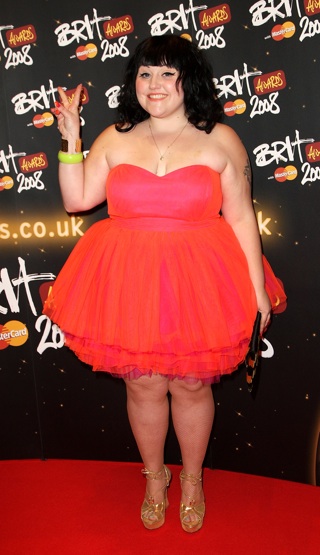
Love the Body You've Got (Take it From a Fat Girl)

I've never seen anyone like Beth Ditto in
the limelight before; I think her beauty is
absolutely magnetic. Hooray for confidence!
I recall a time in elementary school when a friend tried to defend me from a few bullies by saying that I "wasn't fat, just big-boned." A few years later, I had a teacher who — probably in an attempt to keep my ego intact — wouldn't let kids say "fat" in class, only "fluffy."

To set the record straight, I do not have abnormally large bones. And I am not, nor have I ever been, a rabbit. But whether it's these sugar-coated terms or the painfully unoriginal "ugly fat girl," I've never quite been able to shake my overweight status for long.

Despite a few traumatizing events (i.e. falling off the jungle gym, losing my paper pilgrim's hat on Thanksgiving, etc.), I have relatively good memories of elementary school. I was about a foot taller than everybody else and began experiencing all the joys of early puberty (ah, training bras!), but I still don't remember those days in terms of my body. Rather, I remember going insane on Field Day (I still have the ribbons to prove it), competing with my classmates to see who could write the most numbers (we had to sprawl our lists out in the hallway to measure them), and playing "The Magic Scrap" when our teacher needed to trick us into cleaning up our messes.

Middle school was a different story. I don't know what they started putting in the Capri Suns the summer between my 5th and 6th grade years, but everybody got meaner while I became more and more self-conscious. I was significantly - shall we say, heftier - than my classmates, and there were always those intent on reminding me that I was fat and they were not.

I was an emotional wreck. Whether people recognized it or not, I was basically writhing in my own skin, caught between trying to wear clothes that were "hip" (and feeling awkward), and falling back on dingy jeans and band t-shirts (and still feeling awkward).

I love Adele. But whenever I go on
Youtube all I see are comments
saying how "fat" she is. Tell me
this woman isn't beautiful.
High school, I am proud to say, is much better. No overweight teen is going to escape the negative comments that inevitably bounce through high school hallways, but I've found a comfortable niche among friends and clubmates where I feel almost immune to that sort of thing. I've been living by the mantra "If it won't matter in five years, don't worry about it."

But last week, after a several-month streak of body positivity, somebody really hurt me. And I don't even think they meant to.

Long story short, this person (who is probably a size 4 or smaller) complained about how much weight they've gained and, in a not-so-subtle way, alluded to the fact that I was unhealthy. Really? You're going to complain to me about how much weight you've gained? And then you're going to criticize my health, despite the fact you know how hard I bust my butt for school, projects, and all the stuff I'm involved with? I was literally thinking: "Sorry, insert-name-here, I haven't had much motivation to exercise lately. Hard to imagine why."

Needless to say, I felt really crappy when I got home that day. But then I found these posters in the Love Your Body Day section of the NOW website and immediately felt better.

My favorite poster.
To top it all off, I also found this quote in a random comment on the Ms. Magazine website:

The less we judge each other by the contours of our bodies, the more clearly we will see the true content of each other's characters.

Isn't that awesome?

It reminded me that in the grand scheme of things it doesn't matter what we look like, just what we do. We're not going to be remembered for being a size 4 (or 24), so we might as well make the most of life without letting insecurities "weigh" us down.
______________________________________________________________

You may not know Beth Ditto (pictured above), but she's the lead singer of a band called Gossip (which originated only 30 miles from my hometown). Ditto is apparently well known for her outspoken support of both LGBT and feminist causes (according to the all-knowing Wikipedia), and is also an advocate of body positivity. Even if this isn't exactly my type of music, it's cool to see a bigger girl rock it out for once!

May 19, 2011

New Feminist Blog in Town: "Blossoming Badass"

Get it? Blossoming Badass? Yeah, it's clever.
If you'd like me to advertise your feminist blog in an upcoming post, shoot me an email!

I'm always excited when somebody emails me saying they're the proud owner of a new feminist blog. Blogging is such an amazing way to meet new people and "expand your horizons" (whatever the heck that means), and I would highly encourage all of my feminist friends and readers to start one!

Today we're hearing from Alexa, author of a new blog called Blossoming Badass:

Danielle: What inspired you to start a feminist blog?

Alexa: I've enjoyed frequenting feminist blogs since I started high school, my favorite being The F-Bomb. I frequently rant to friends and family about feminism, try to incorporate it into my school writing, and even write pieces on it for myself. I submitted a few of those to The F-Bomb and was pleased with the work I'd done and response I'd received, so I decided to start my own blog!

D: Why did you decide to call it "Blossoming Badass"?

A: I wanted a blog with a catchy, intriguing title that I thought described me. I wanted to encompass a feminist-type attitude too; although I know there isn't one type of feminist, badassness seems to be a trend. (I also have a thing for alliterations.)

D: What topics do you plan to cover?

A: I plan to cover topics mostly pertaining to feminism, particularly body image, self esteem, and the media. I'll also cover reproductive rights, how people (especially girls) interact, and high school in general.

D: Have you always been a feminist, or is it a relatively new thing for you? What about feminism appeals to you so much?

A: When I was younger, I didn't have any feminist influences, nor the confidence to be a fervid feminist. I've been a devout feminist, though, since a school project on suffragist Elizabeth Cady Stanton in fourth grade and having a teacher who was a very confident, outspoken feminist (although I didn't understand this at the time.) The next year, beginning to read New Moon Girls magazine was a major catalyst. I didn't meet any adult feminists until four years later. Feminism appeals to me because it's for equality, and it has so many subsets that can appeal to slightly differing audiences. Something about it just gives me a thrill, and it makes me feel that I can, as cliche as it sounds, change the world.

Screenshot!
D: Who do you hope to target with your blog?

A: I hope to target young women, particularly high school students who may not have previously associated with feminism . . . Feminist, body-positive blogs were what really pulled me out of constant negative self-image, [so] I want to help others like their bodies as well.

D: What advice do you have for other teens who're just discovering feminism? What do you wish more teens would know about feminism?

A: I advise other teens to look at all of the awesome blogs and books for young feminists! With the Internet, feminism is more prominent than ever. I wish more teens knew how applicable feminism is to our daily lives. All of the things that plague us each day - the pressure for girls to be perfect, struggling with the virgin/whore dichotomy, hesitancy to express oneself - these are all issues addressed by feminism!

D: Would you encourage other teen feminists to start blogs of their own? And if so, why?

A: I think that blogs are an awesome outlet for teen feminists who may not have another forum for their opinions. If someone didn't want to start his/her own blog, commenting on others (there are super ones in my blogroll!) and submitting posts can be a great way to get involved.